Sunday, December 10, 2017

Weakness is not an option

       In a society dominated by sports, there is a constant magnifying glass on professional athletes and the hyper-masculinity that dominates sports culture. In professional sports team leagues across America there have only been a handful of professional athletes who have come out as gay and supported the LGBTQ community. There is a constant societal pressure in professional sports to maintain a sense of masculinity and strength. Particularly in sports such as football or basketball, which are contact sports that can often turn violent, weakness is not an option. The media preys on weakness and does not hesitate to blast players who come across as soft. Displaying femininity in the arena of professional sports for male athletes opens up the doors for sports commentators to bash on athletes and attribute their failures to their lack of masculinity. 


       Due to the hyperawareness of masculinity, the world of sports pushes men to show as many macho tendencies as they possibly can. In the NFL in particular, the entire sport of football is driven by heteronormative masculinity (https://goodmenproject.com/featured-content/masculinity-is-killing-the-nfl-deflategate-wasl/). Players bang their heads against lockers before games, they pound their chests to induce a testosterone filled rage, and they even abstain from sex during football season, believing that this build up of testosterone will better their play on the field. When looking at Dude You’re a Fag, by C.J. Pascoe, the boys Pascoe discusses also engage in extreme heteronormative masculinity. The very essence of the book is these boys doing whatever they can to avoid being deemed a fag, and acting in a feminine manner. The boys, similarly to professional athletes, would only engage in activities that would make them look hyper masculine. This is very evident in a lot of endorsement deals done with professional athletes. The advertisements are often times done in a manner to target young boys who want to look like and act like their role models, who are the professional athletes. I’ve noticed in advertisements for professional basketball players, the ads focus on how to achieve the look of the player and mimic their actions to the best of one’s ability. 

       This complete focus on masculinity in professional sports can be very daunting to athletes who may be afraid to come out as gay. This arena is not a safe place where judgement is not present. Michael Sam was the first player in the NFL to be drafted after coming out as a gay man. While a good portion of people were very supportive of Michael Sam, he received serious backlash for kissing his boyfriend on camera when he found out he was drafted. This was considered a feminine action by a lot of sportscasters, who blamed Sam for not keeping the focus on his talent. However, when a straight player kisses his wife or girlfriend when being drafted, no one even looks twice. 


       This constant need to focus on masculinity in professional sports is discouraging for all young athletes who are afraid to be themselves and come out as who they are. As a society, we need to move away from this intense focus on heteronormative masculinity in sports and be accepting of all people. 

We all laughed.


The renown American sitcom, Family Guy, has created a sense of humor that strives on the viewers ability to understand everyday social and political life. Seth MacFarlane, the creator and main voice actor of the show, has, on multiple occasions, been criticized on the crude humor of the show as it targets a dark sense of humor through stereotypes, political issues, religious attacks and sexual remarks. When asked on the dark humor of the show, MacFarlane offered an enlightened response by saying that the show is "making fun of the stereotypes" and not the specific group in which the stereotype targets.

The shows main target point, at which they use politically and morally incorrect slurs, is through the  cut-away gags, and used to provide a better understanding of the shows humor. Often, jokes involve  the use of a targeted ethnic group from which the "stereotype" is made fun of. In a more recent season of family guy (S11E15), the episode entitled "Turban Cowboy", places Peter Griffin, the father and main character of the show, in a difficult situation as he becomes a terrorist through his Muslim friend, Mahmoud. In a desperate attempt to blow up a bridge, Peters new group of friends encouraged him to be the one to drive the vehicle. The writers would later place Peter at a check point where an officer admits him passage because the color of his skin is acceptable. The episode attacks major stereotypical and racial remarks through the use of subliminal messages as it hides the criticism behind the humor. As an unfortunate repercussion, the episode places Peter with a car bomb, driving through the Boston Marathon, only a month before the unfortunate real life attack took place in 2013.

Along with the horrible jokes the show displays, it creates a sense of identity to certain characters of the show. Characteristics that are seen socially and morally incorrect have played a large roll in the shows success. Peters long time neighbor, Glen Quagmire, a sex crazed maniac who on multiple occasions has made comments to the number of women he has slept with, the racial groups to which they belong, and even the inhuman jokes on how young some of the women have been.

Herbert, an elderly Quahog man, is a secret pedophile who on multiple occasions has made sexual moves towards Peters teenage son, Chris. Although seen as a sweet elderly man to his community, Herbert's sexual need for young children has created hidden messages to its viewers who find his vulgar attacks on young children as "funny."

Finally, Peter Griffin, a drunken fat man with little respect for others, lives as a "mentally retarded" (S4E6) man who constantly finds no consequences to his stupid and irresponsible actions. Striving on his stupidity, the shows main character forms the backbone of its success as he provides most of the its crude humor. His actions, whether they be drinking on the job or disobeying multiple laws and getting into fights with a giant chicken, have given the show 16 successful and continuing seasons. Peter, along with the help of his family and friends, share in the crazy adventures of a white suburban family and the "life lessons" it provides. The show offers a metaphorical two-way mirror as the jokes said are seen as funny, while holding a hidden meaning behind its dark humor that targets viewers of different ages. But lets be real, we all laughed at the end of the joke.

What the Frack is going On?

Over the past decade, fracking has spread rapidly, leaving a trail of contaminated water, polluted air, and marred landscapes in its wake. As said in an article in Scientific America "However, the true cost of fracking — ranging from cleaning up contaminated water to repairing ruined roads and beyond — are likely to be borne by the public, rather than the oil and gas industry. And as with the damage done by previous extractive booms, the public may experience these costs for decades to come." 

Fracking is the new boom in The U.S., but what people don’t realize is it’s a huge environmental hazard. Some people don’t know what fracking is, so we’ll lay out the basics. Here is some background about fracking before we can talk about the negative effects it has on the environment. "Many sandstones, limestones and shales far below ground contain natural gas, which have formed as dead organisms in the rock decomposed. This gas is released, and can be captured at the surface for our use, when the rocks in which it is trapped are drilled. To increase the flow of released gas, the rocks can be broken apart, or fractured. Early drillers sometimes detonated small explosions in the wells to increase flow." As said by New York Times. On the surface this seems like a groundbreaking discovery and a great way to solve the energy crisis. No!! Fracking is very dangerous and only leads to more pollution into the air. When companies drill and force millions of gallons of water they have this fracking cocktail which includes acids, detergents and poisons that are not regulated by federal laws but can be problematic if they seep into drinking water. This lethal concoction then seeps into the ground and gets into underground streams. Eventually these chemicals get into peoples drinking water. Now thousands of people have to worry about what chemicals are in their water and also the air. A study in Pavillion, Wyoming, has shown that people's “wells were contaminated with fracking wastes that are typically stored in unlined pits dug into the ground.”


What's even worse is that most of the chemicals in fracking are not chemicals that commercial laboratories can detect. These labs were originally set up for the Superfund program, under which EPA cleans up the most contaminated sites in the nation. “They are great at detecting chemicals found at Superfund sites but not as good at detecting chemicals used in fracking.”  One such chemical is methanol. The simplest alcohol, it can trigger permanent nerve damage and blindness in humans when consumed in sufficient quantities. This is similar to the a problem mention in Soybeans and Power, where chemicals and pesticides are sprayed into the air and contaminate nearby villages drinking water and can eventually lead to illnesses. In a case study shown on EnvironmentAmerica Dimock, Pennsylvania, fracking contamination ruined the local drinking water supply. The cost to permanently replace drinking water with a new source is estimated at more than $11 million. There are hundreds of cases like this where people are paying thousand of dollars in health cost because of these companies and the pollution they are causing. Fracking is bad for the everyone living in the environment and the earth itself. Is the cost of fracking really worth the health risks, or should our money be spent on finding a cleaner, more renewable energy?

picture 1
picture 2
WHY YOU ARE NOT PROTESTING


Social movements are a very important medium of empowerment, yet many of us are discouraged to “go out there” and raise our voices in protest. What is the source of this discouragement, you may ask? I was talking to a friend of mine from Colorado some time during this semester. Our discussion was about student protests. I told him that in Italy students would organize riots and protests during a normal school day and get the lesson to be cancelled. At that time I was happy to get my classes cancelled but now I understand the importance of gathering. We used to organize one each month, together with other schools. This went on for about a semester, until the Department of Education gave us a day every month to “democratically discuss the issues related to the school and society in order to maximize the cultural and civil education of the students." I remember our professors being very biased about a protest. The overall reaction was “I am going to give you all a zero for participation if you don’t come” and many times I was threatened by that zero that I did not protest. He had a very surprised face and told me that “authorities, including the government are against the people here.” My follow up question was “Have you ever taken part in a protest?” and the answer was negative.
In these three months spent in Portland, I heard a lot about protests. I talked to people that participated in some. And I talked to people that wish they could bring up a change. I can’t avoid the fact that all the protests I heard about surely enhanced the negative consequences that they caused. I started to believe that social media has a big influence on how people perceive rallies and their willingness to protest. Sigmund Fraud investigates in his article the reasons that hinder citizens from protesting. In primis threats from military authorities, followed by regulations from the government and the media that simply focuses on any kind of violence that happens.


This is a screenshot of the results from the search “Ferguson riots” on Google Chrome. The fire, the angry faces and the masks portray the idea that protests are hazardous and perilous, thus lessening the willingness of citizens to even challenge an attack. Another technique used by the media is glittering generalities, or phrases and mottos that address people’s pathos by touching upon important values. The pictures above and the news linked to the rally description portray “the other side” in a way that the average citizen cannot sympathize with it.
An example of this happened some months ago when the NFL players decided to kneel instead of standing during the anthem as a form of protest against the police assaults against African Americans. Many critics argued that this action led to a loss of patriotism and perceived it as disrespectful towards the country, the flag and the anthem too.


Trump was the first to discourage the behaviour by posting tweets condemning the protest.
The ethics behind what the news describes as going against the moral code of “being American” turn out to be an argument against protesting. Nationalism and the idea of belonging restrain the impetus of the citizens to openly protest in favour of their beliefs, not simply by fueling the idea that only amoral citizens protest, but also by reinforcing the opinion that there are more bad outcomes than good ones in protesting, and no change is achieved, only the shame of treason.
Despite these negative conceptions of protests, many disagree. The article “How Social Movements Matter” explores the importance of using social movements to empower the individual’s voice. The author, David S. Meyer provides multiple examples of social movements that affected public policies and the internal affairs of political institutions in the long run. For example, the nuclear freeze movement further affected the federal bureaucracy of gun controls during Kennedy’s presidency and the many environmental movement that collect money from donors and publicizes government operations. His report enhances the positive vision that social movements can and do make a change, functioning as an incentive for people to gather and protest.

It is clear that the authorities and media conceal the truth that protests have power to prevent public support and magnify individuality more than the idea of being part of one community.

I believe that there are two sides, the protester and the anti-protesters.
Do we now stand together with our people or with the government?

Lessons Mothers Gave to Their Serial Killer Sons

I had been curious about the socialization of serial killers for a while. Recently, I read about how Ed Gein’s mother’s beliefs influenced his killings. As a result, I decided to explore how serial killers’ mothers perceived gender and how their perceptions influenced their sons’ thought processes. While there aren’t many details available about how mothers performed gender in their daily lives, overarching ideas and a few specific events allow me to dissect notions and codes about gender that they projected onto their sons.

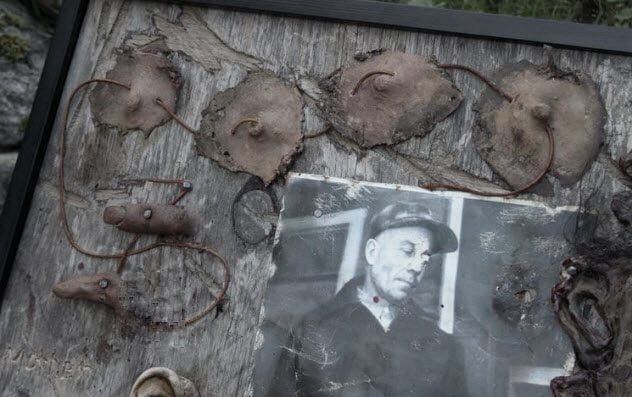
One of Gein's 'artifacts' created from human fingers and breasts
credit: batcountrysite.wordpress.com


I focus specifically on male serial killers and their mothers for a few reasons. A serial killer is defined by the National Institute of Justice as someone who commits two or more murders “with a psychological motive or sadistic sexual overtones”. While this definition does not have complete generalizability, it is safe to say that it’s not uncommon for serial killers to have socially deviant sexual motives. It is valuable to examine the existence of these motives in tandem with performances of masculinity. Statistics from a database show that men form an overwhelming percentage of the total active serial killers. In 1990, global proportions were as skewed as 922 men to 69 women. Moreover, a serial killer’s relationship with one’s mother is often highlighted as a key common pattern in discussions. As we consider the impact their mothers’ beliefs had on them, it is also important to note that most of these beliefs were communicated during the men’s childhoods, at which times they were very impressionable. Let’s see how this played out with Ed Gein, a killer notorious for the atrocities he committed.

The twistedminds.creativescapism website writes “Ed Gein’s religiously fanatical, notorious mother (Augusta) convinced her son that women were vessels of sin and caused disease”. Many sources have stated that Augusta was extremely religious and believed all women were “prostitutes and instruments of the devil”. Perhaps the word ‘prostitute’ is used with too many different denotations depending on the user. This makes specific meanings such as Augusta’s difficult to discern without an explanation. Nevertheless, its usage leaves an incredible mark on the young serial killers to-be. As Michael Buchanan writes, “In some sort of twisted misinterpretation, Gein made literal vessels out of women, using their skulls for bowls, and other domestic objects.” This quote directly shows the effect Gein mother’s thinking about what women were had on what kind of a serial killer he wanted to be and how he wanted to kill. He considered his mother a saint and revered whatever she told him. He mutilated women after his mother constantly shared that gendered bias (to say the least) with him.

David Berkowitz, known as the ‘Son of Sam’ entered his trial chanting “Stacy was a whore”. Stacy was his latest victim. His use of the word ‘whore’ shows us that he views it pejoratively instead of being simply descriptive and thus neutral. When Berkowitz was much younger, after long having believed his mother was dead, he found out that he had been conceived as a result of her affair with a married man. He was disgusted and grew up to believe that sexually active women were dirty, lesser, and undesirable. He took this belief and translated it into knowledge about what kind of a woman he victimized, i.e., a ‘whore’. And, he believed this for all his victims, who he said he would kill again if possible. He practiced toxic masculinity in his thoughts and behavior as a killer. There is an unprecedented power, it seems, in the thoughts and beliefs our mothers convey to us in our early years.

Carroll Cole’s father fought in the Second World War, so as a child he witnessed his mother’s multiple sexual encounters. His mother’s sexual(ly deviant) behavior angered him. Later in his life, he would meet women in bars and while many of them would leave unharmed the next morning, he killed those he perceived to be “loose”, in particular, those who were married. Once again, we see the direct impact of a mother’s performance of gender as a ‘loose woman’ on her son’s thinking about how to be a serial killer.
There is a shared, underlying hatred for women who these men perceived to be too sexually active, which as we saw originates from their mothers. By calling these women whores or prostitutes, they asserted that women had a lack of sexual agency, and their sexual worth would be decided by words like 'slut' that men chose to use against them. In some form, their mothers had taught them to belittle women’s sexual choices by giving them pejorative labels.

The other commonality that shocked me was incidents of mothers dressing the young boys in what would typically be considered “girls’ clothes”. Take it right from the source: “If this were not enough, Cole’s mother would dress him in frilly dresses and petticoats for the amusement of her and her friends. They would sit at a table, and he would be forced to serve them tea, dressed as a girl, with his hair curled while they would laugh and call him names.” They go on, “On one occasion, when he was nine, Cole drowned a boy in his class who had called him a sissy, but the incident was thought to be an accident until Cole admitted to it years later in prison.”

Sissy is a word specifically used to denote that one is not courageous, strong, or whatever enough: not masculine enough. Their mothers used this word to instill a perverse sense of masculinity in them. Then, to be attacked by another boy for displaying a lack of masculinity again would result in a harsh reaction. Their mothers essentially de-masculinized them, and this made them obsessive about the portrayal and perception of their lack of masculinity and femininity. Essentially, their mothers consistently communicated that being a prostitute and a sissy was an insulting, degrading, lesser way of being.

These are not the only such stories. These common links fascinate me because they reflect on a unique role women play in the perpetuation of patriarchal violence. I hope that I have ignited some curiosity in you, and acknowledge that for some reason it’s only obscure listicle sites on the world wide web that tend to focus on and cover serial killers, so I have tried my best to provide reputable sources, but it has been hard.

Politicizing People

On July 1, 2015, Kate Steinle was shot by Jose Inez Garcia Zarate. Zarate's status as a homeless undocumented Mexican immigrant politicized Steinle's death rendering it a flashpoint in the national immigration debate. Donald Trump cited Kate Steinle's death during his presidential campaign to push for stronger borders indeed resonating with his supporters. Two weeks ago, the San Francisco jury found Zarate not guilty of murder. Now with Zarate's recent acquittal, Trump tweeted "A disgraceful verdict in the Kate Steinle case! No wonder the people of our Country are so angry with Illegal Immigration." and so the immigration debate bubbles again.

Many "Justice for Kate" marches and protests have been organized all around the country within the past week. I observed the end of a march and demonstration this Saturday, December 9 in downtown Portland.

The right-wing Patriot Prayer (right) group rallied in downtown Portland to protest the acquittal of an undocumented immigrant in the shooting death of Californian, Kate Steinles. Anti-fascist group Rose City Antifa (left) showed up to counter protest.

Above is a very Portland scene. Counter protesters on each side of the street and some riot clad police - with a Subaru in the middle. Striking to me was the interaction between protesters and anti-protesters. The two groups started out yelling across adjacent blocks. There was a couple of minor skirmishes. Later they marched down to the waterfront while yelling insults at each other. There was a bloody nose, some mace spraying, and one arrest. What I mostly witnessed was heated arguing that took to provoking the other through ridicule. I did also speak with some protesters from both sides.

José, the person holding the Mexican flag on the left side of the picture, expressed his thoughts to me on the racist underpinnings of Patriot Prayer's anti-immigration movement. I felt proud and excited to be able to share beliefs with someone at this event, the same excitement and pride of solidarity that brought both groups of protesters out that day. In fact despite their polar opposite political viewpoints, Patriot Prayer and Antifa do not differ in their development as social movement groups.

A popular and influential explanation of social movements is sociologist Neil Smelser's (1963) value-added theory. Smelser argues that social movements and other collective behavior occur when certain conditions are present. One condition is structural strain (or social strain) which refers to problems in society that cause anger and frustration giving rise to protest and other forms of mobilization. Antifa members mobilize under the strain of a fascist organizing. A popular chant is: "No Trump! No KKK! No fascist U.S.A.!" Generalized beliefs (or an agreed definition of the problem) include people's reasons for why conditions are dire, their solutions, as well as the group's binding ideologies. Patriot Prayer organizes under the common 'proud American and proud Christian' belief systems. They often simply chanted, "U.S.A.! U.S.A.! U.S.A.!"

Furthermore, an important condition for protest is a precipitating factor: a certain event that ignites people to take action. In this case, the death of Kate Steinle is the precipitating factor for Patriot Prayer protesters and the protest itself compelled Antifa's involvement.

The most poignant takeaway for me was the dehumanization I witnessed. Its easy to dehumanize our enemies. The two groups of protesters were deeply entrenched in the self/other mindset. Their intense anger and frustration limited the identities on the other side to 'enemy' which manifested in generalized ridicule and harm.

We also dehumanize victims. Its often that the names and photos of people who are connected to a political issue become emblematic. Kate Steinle is definitely one of those names. President Trump "sensationalizing" Kate Steinle's death is inappropriate, especially considering his failure to contact the Steinle family at all.

The American melting pot is boiling. Politically, tensions have been running high with stark polarization occurring between Americans on the left and the right. People impelled by social strain have been pushed to the political fringes where division forms as much as community. Ultimately, however, people are much more than their political identity. It is when we lose sight of this essential point that the most flagrant of human behavior is justified. 

Masculinity, And Why You Should Adopt It

Living during a progressive time when it is easier for people to break from societal norms than it was in the past, it is almost alarming to see how old-fashioned many values are that people today hold in regards to gender and sexuality. Yes, the LGBTQ+ community has seen much success for quite some time now, which can be seen simply in the fact that homosexuality is no longer classified as a mental disorder. For the most part, as a society we no longer shun two men for holding hands, but their identities as men are usually questioned in lacking a “sufficient” sense of masculinity. Somehow, “being a man” goes well beyond physical anatomy and self-identity, and it is curious to see the ways in which this is seen in our society even today in 2017.
Masculinity is a vastly convoluted concept that has developed over many years into being the standard identity that men are expected to follow. What does this mean exactly? Although many definitions and descriptions of what it means to be masculine exist, the idea behind it is quite a bit more complicated, as there are many factors that go into successfully exhibiting a sense of masculinity. One of the things at the fundamental core of masculinity seems to be an attraction to women, making it so that oftentimes men who find themselves attracted to other men are therefore seen as not being “masculine” enough. Interestingly, a study has noticed that bisexuality has become gendered, in that far more women identify as being bisexual than lesbian, whereas far more men identify as being gay than bisexual. Clearly there are many factors that go into these results, but they are suggestive of a possible larger trend for men to either fully accept or denounce their “masculinity” when it comes to their sexual orientation.
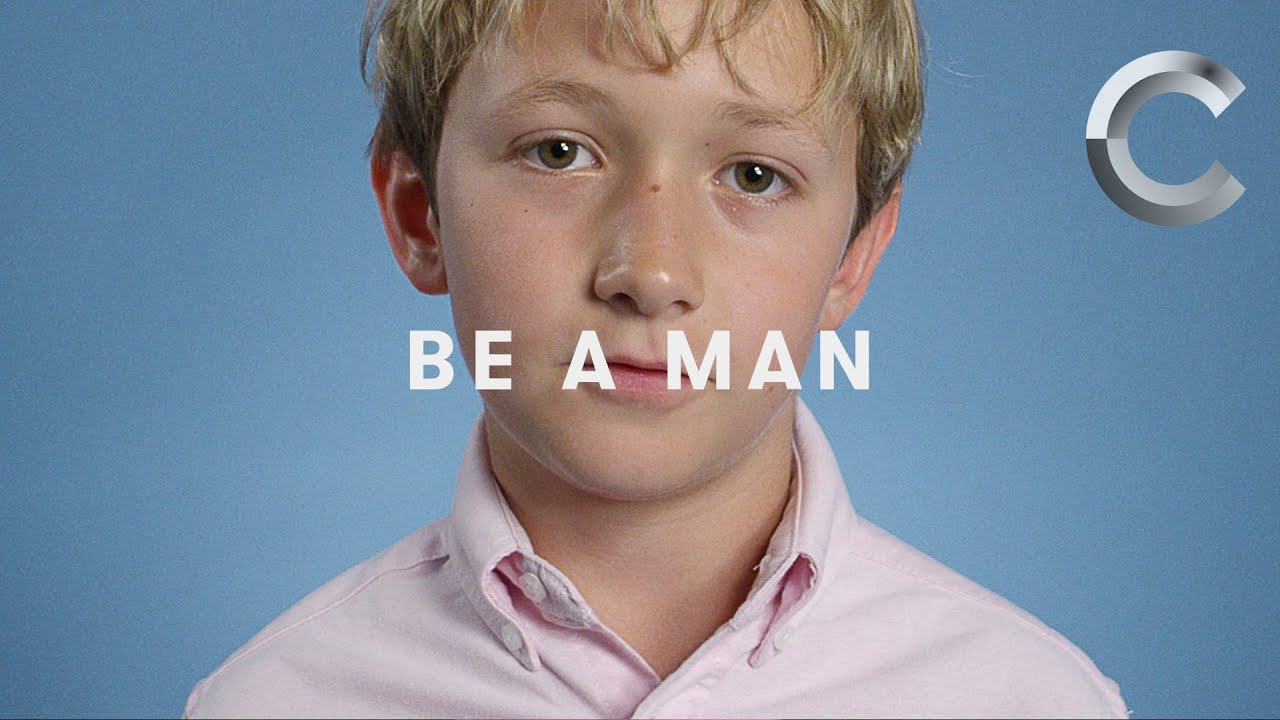
https://i.ytimg.com/vi/KYvWhzSKoc4/maxresdefault.jpg
Even within the LGBTQ+ community, this expectation for people to strive to exhibit masculinity manifests itself in different ways. It has become a growing trend for men looking to hook-up with other men on social media to explicitly list on their profiles “masc 4 masc” or “no fems”, with the intent of warding off more “feminine” men. This is surprisingly divisive for a demographic of people who are already disadvantaged and who seek the respect of others. This may very well be due to the reality of the sexual preferences of certain men, but it acts as a way to deny traces of femininity and to place masculinity at the top of the power hierarchy. It is also interesting to note that men are not the only people who seek to achieve masculinity, which is seen, for example, in C.J. Pascoe’s book Dude, You’re a Fag. Pascoe encounters a girl who identifies as a lesbian who does not seem to encounter discrimination from her classmates because she embodies masculinity in that she dates many girls and rejects traits seen as being “feminine”. If exhibiting masculinity is not only appealing to men but to a small number of women as well, it could lead one to wonder the extent to which there is a sort of privilege associated with it.

One could have hoped that by now we would live in a world that is accepting towards all identities that a person chooses to hold, a world that does not expect them to act a certain way or meet standards in order to belong. The unfortunate reality is that this world does not yet exist, which can be seen in the way that most men, regardless of their sexuality, feel pressured to prove themselves as “masculine” men. It is important to note that the power hierarchy that holds masculinity at the top has almost always been around, meaning that it will certainly take a lot of time before this power structure is updated to fit our ever-changing society. Until then, we will have to do what we can to bring about the day when we are all allowed the freedom to be who we want.